

 Facebook
 X
X
 Pinterest
 Copy Link
America’s Housing Shortage Stabilized in 2024, But Affordability Challenges Remain
Meta Description:
Learn how America’s housing shortage changed in 2024, why new construction helped slow the deficit, and what it means for home buyers and the housing market.
America’s Housing Deficit: A Step Toward Balance?
For years, the United States has faced a growing shortage of homes. Limited construction after the 2008 financial crisis contributed to a significant gap between housing supply and demand.
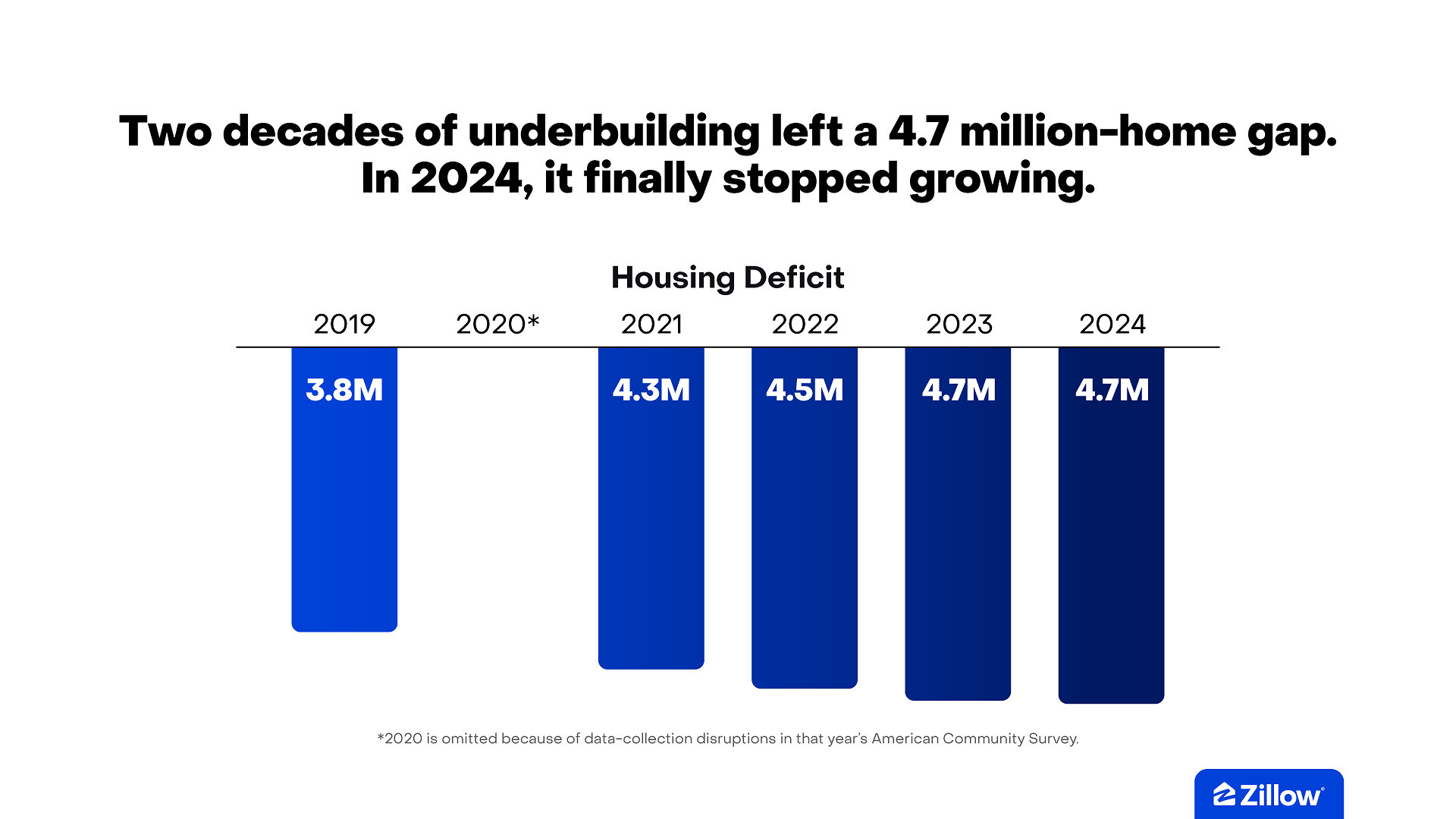
According to recent Zillow research using U.S. Census Bureau data, America’s housing deficit reached approximately 4.7 million homes in 2024, but the shortage grew by only 43,000 units — a major slowdown compared with previous years.
The deficit increased by:
- 257,000 homes in 2022
- 159,000 homes in 2023
- Only 43,000 homes in 2024
This suggests that housing supply and demand moved closer to balance for the first time in years.
New Construction Helped Slow the Housing Gap
One of the biggest reasons the housing shortage stabilized was increased construction activity.
The total number of housing units in the country grew by approximately 1.4 million homes in 2024, supported by strong multifamily construction. Newly completed multifamily homes reached their highest level in about 50 years.
While this growth has not eliminated the housing shortage, it helped prevent the gap from expanding at the same pace seen in previous years.
What Does This Mean for Home Buyers?
A more stable housing supply could eventually help improve affordability, but challenges remain.
Housing affordability is still affected by:
- Home prices
- Mortgage rates
- Limited inventory in many areas
- Local housing supply restrictions
In expensive markets such as Los Angeles, New York, Boston, and San Francisco, affordable housing options remain especially limited.
The Future of Housing Supply
Experts suggest that increasing housing availability will require continued construction, updated zoning policies, faster permitting processes, and additional housing solutions.
Although the housing shortage has not disappeared, slowing its growth is an important step toward creating a healthier housing market.
Source: Zillow Research and U.S. Census Bureau Data
